Have you ever picked up a handmade ceramic bowl and noticed that its tiny variations make it feel more alive than a factory-made piece? That is part of the charm of Moroccan ceramics . Behind the painted surface is a long tradition of working with clay, shaping practical objects, and turning everyday ceramics into expressions of local culture.
When you explore Morocco pottery, you encounter several regional traditions rather than one single style. Safi, Fez, Tamegroute, and other areas have developed their own approaches to color, glazing, decoration, and form. Among them, Safi ceramics have become particularly well known for their long history and active artisan community.
Whether you want a traditional ceramic bowl, a decorative plate, or a handmade piece for your home, understanding how Moroccan ceramics are made helps you appreciate what you are buying.
Moroccan ceramics refers to ceramic objects traditionally produced in Morocco from clay and other ceramic materials. These objects can be practical, decorative, or architectural.
You will find Moroccan ceramics in forms such as:
The craft combines practical needs with artistic expression. A simple bowl may be designed for everyday use, while another can be painted and glazed specifically for decoration.
pottery also varies considerably from one region to another. UNESCO describes Safi’s pottery tradition as centuries old, with production continuing in specialized districts such as the Potters Hill and Potters Village. Traditional shaping, glazing, and firing techniques remain part of local production.
The story of Moroccan ceramics reaches far beyond modern souvenir shops. Pottery has long been useful for storing food and water, preparing meals, and transporting goods. Over time, artisans developed regional methods and decorative traditions.
Early pottery in Morocco included practical handmade vessels. In some traditional Amazigh communities, pottery was shaped by hand using methods such as coiling rather than relying entirely on a wheel.
These objects were functional, but their surfaces could also carry geometric marks and other decorative elements.
As different communities interacted through migration and trade, ceramic techniques evolved. Urban pottery developed its own characteristics, particularly in major historic centers.
Islamic artistic traditions had a major influence on Moroccan decorative arts. You can see this influence in the use of:
Ceramics also became closely connected to Moroccan architecture through tiles and mosaic work.
Different cities gradually became associated with distinctive ceramic traditions. Fez developed an important reputation for its blue pottery and architectural ceramics, while Safi became a major center for colorful glazed pottery and artisan production.
Historical accounts also document an important turning point in Safi during the late 19th century. In 1875, potter Mohammed Langassi from Fez established a faience workshop in Safi, contributing to the development of the city’s modern ceramic identity.
If you are shopping for Moroccan ceramics, knowing the region of origin can help you understand why two pieces may look completely different.
Safi ceramics are among the most recognizable Moroccan ceramics traditions.
Safi’s relationship with pottery stretches back centuries. Today, production remains concentrated around areas including the Potters Hill and Potters Village. UNESCO reports that Safi’s pottery sector includes more than 200 workshops and directly employs approximately 1,500 to 2,000 people.
Safi pottery can include:
Blue and white motifs are particularly associated with Safi, although the city’s ceramic production encompasses a broader range of colors and designs.
Fez has a particularly strong association with glazed ceramics and blue decoration. Its ceramic tradition is also closely connected with zellige, the small geometric tiles used throughout Moroccan architecture.
If you see finely arranged geometric tiles in a Moroccan riad, mosque, or historic building, you are looking at a tradition in which ceramic craftsmanship and architecture meet.
Tamegroute pottery comes from southern Morocco and is known for its distinctive earthy appearance and colored glazes, particularly green and yellow tones.
Its visual character is quite different from the refined painted styles you may encounter in Fez or the broader range of Safi production.
The region gives you useful clues about a ceramic piece’s:
That is why “Morocco pottery” should not be treated as one uniform category.
One of the best ways to understand handmade pottery is to follow it from raw clay to finished ceramic.
The artisan first prepares the clay, making sure it has a workable consistency. Depending on the workshop and production method, the clay may be cleaned, mixed, kneaded, and prepared for shaping.
The form can be created by hand, on a pottery wheel, or through other workshop techniques.
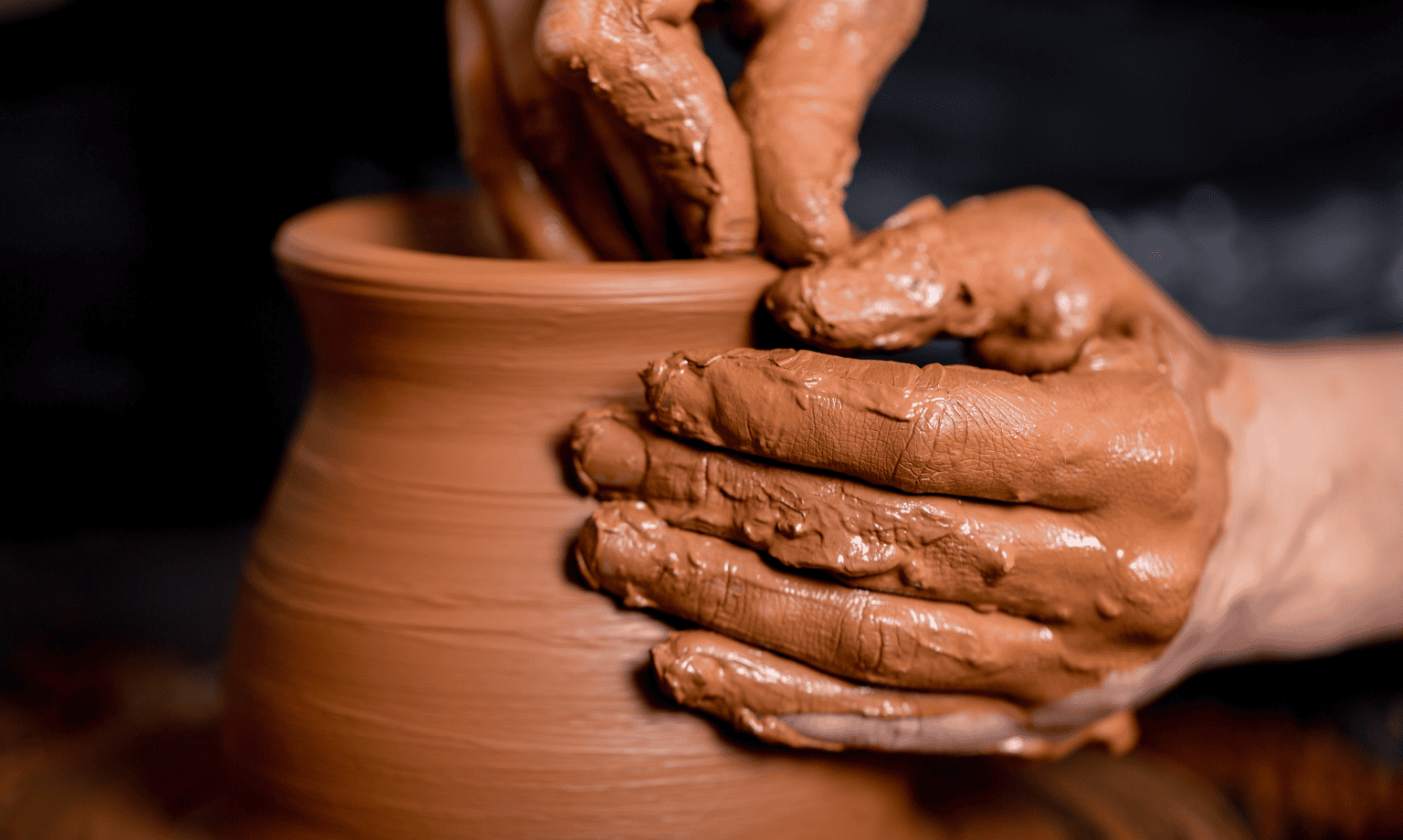
For a wheel-thrown bowl, the artisan has to control the clay while simultaneously managing its thickness and shape. A small change in pressure can alter the final form.
After shaping, the piece needs time to dry.
This stage is easy to overlook, but it is essential. Uneven or rapid drying can cause cracks or deformation before the pottery even reaches the kiln.
Now the piece starts to develop its personality.
Depending on the regional tradition, artisans may use:
Glaze can change the entire appearance of a ceramic piece. It may add color, shine, protection, or a smoother surface.
The result depends on the glaze itself and what happens during firing.
The decorated piece is placed inside a kiln and exposed to high temperatures. The heat hardens the clay and helps transform the glaze into its finished surface.
Safi continues to use traditional firing methods alongside technical adaptations. UNESCO specifically notes that traditional shaping, glazing, and firing techniques remain active in the city’s pottery districts.
Once the pottery has cooled, the artisan can inspect it for:
A finished handmade piece is therefore the result of several stages rather than simply a shaped piece of clay.
One reason Moroccan ceramics works so well as home décor is its visual richness.
You may see:
Geometric decoration is particularly important in Moroccan art and architecture.
Some pieces incorporate stylized:
These motifs can soften the more structured appearance of geometric patterns.
Color varies according to region, glaze, and artisan tradition.
| Color | Typical visual character |
|---|---|
| Blue | Cool and distinctive |
| Green | Natural and vibrant |
| White | Clean and bright |
| Yellow | Warm and energetic |
| Brown | Earthy and rustic |
| Red | Rich and expressive |
You should not assume that every color carries a fixed symbolic meaning. The appearance of a piece depends heavily on its regional tradition, glaze, firing conditions, and artistic design.
A ceramic bowl is one of the most versatile pieces you can buy.
You can use it for:
A hand-painted bowl can also work as decorative art when you are not using it for food.
Moroccan plates range from simple serving dishes to elaborate decorative pieces.
You can place a collection of decorative plates on a wall or combine smaller pieces with contemporary tableware.
The tagine is one of Morocco’s best-known ceramic objects. Traditional tagines are designed for cooking and serving, while decorative versions may be intended primarily for display.
Always check with the seller before assuming a particular piece is suitable for cooking.
A handmade vase can add texture to a room without requiring a major change to your décor.
You can place one on:
Ceramic tiles connect Moroccan ceramics with architecture. In particular, Moroccan decorative traditions use small tiles to create complex geometric surfaces.
When you compare a handmade piece with an industrial ceramic, the differences can be subtle.
| Feature | Handmade Pottery | Mass-Produced Ceramics |
| Production | Artisan-made | Industrial |
| Shape | Small variations possible | Highly consistent |
| Decoration | Often hand-applied | Often printed or machine-applied |
| Character | Individual | Uniform |
| Production quantity | Usually limited | Large-scale |
| Craft value | Strong artisan connection | Depends on product |
Not necessarily.
If you buy handmade pottery, you should expect some variation. One bowl may be slightly different from another. A brushstroke may not be perfectly identical. The glaze may pool differently around the edges.
Those characteristics can be part of what makes handmade ceramics appealing.
Not every ceramic object is created for practical use.
Art ceramics can be designed primarily for visual or artistic expression. These pieces may feature more elaborate shapes, complex decoration, unusual surfaces, or experimental techniques.
You might encounter:
Modern Moroccan ceramic artists can also reinterpret traditional patterns and techniques rather than simply reproducing historical designs.
This creates an interesting relationship between heritage and contemporary creativity: you can have a ceramic object that clearly belongs to Moroccan tradition while still looking completely at home in a modern interior.
If you want to buy an authentic piece, don’t focus only on the pattern.
Look for:
You should also ask whether the piece is intended for food contact.
A decorative ceramic is not automatically food-safe simply because it looks like a serving bowl.
You do not need a completely traditional Moroccan interior to enjoy Moroccan ceramics.
Use ceramic bowls and plates as practical serving pieces when they are confirmed to be food-safe.
A large decorative plate, vase, or ceramic bowl can become a focal point.
Try combining Moroccan ceramics with:
The contrast between clean modern furniture and detailed handmade ceramics can be especially effective.
Your pottery can last for years when you treat it according to its construction and intended use.
Before cleaning or heating a piece, check the artisan’s instructions.
Useful precautions include:
These precautions matter because traditional handmade ceramics do not all have the same clay bodies, glazes, firing methods, or intended uses.
You have several options when shopping for Moroccan ceramics.
This can give you a better understanding of where your piece came from and how it was produced.
You may also find designs that are not available through large retailers.
Markets offer variety, but you should take your time comparing:
When purchasing online, look for:
The more information the seller provides, the easier it is for you to make an informed decision.
Moroccan ceramics is not frozen in the past. It continues to support artisans, inspire designers, and introduce traditional craftsmanship to new audiences.
Safi provides a particularly clear example. UNESCO currently lists Safi as a Creative City of Crafts and Folk Art and reports that its pottery sector supports thousands of direct jobs through workshops, cooperatives, and related activities.
The city also has cultural infrastructure dedicated to ceramics, including the National Museum of Ceramics and an institute focused on traditional arts training.
When you place a handmade Moroccan bowl on your table, you are looking at more than a finished product.
You are seeing the result of:
That is what gives handmade Moroccan ceramics its appeal.
Traditional Moroccan ceramics is primarily made from clay that is shaped, dried, decorated or glazed, and fired in a kiln. Exact materials and processes vary by region and workshop.
Safi ceramics are among Morocco’s best-known pottery traditions, but Fez, Tamegroute, and other regions also have distinctive ceramic styles.
Much traditional Moroccan ceramics is handmade, although production methods vary. In Safi, traditional shaping, glazing, and firing techniques continue alongside technical adaptations.
A ceramic bowl can be used for serving food, provided it is specifically made and glazed for food contact. Decorative bowls can also be used as interior accents.
Check the item’s provenance, production details, craftsmanship, and decoration. Slight variations can be consistent with handmade production, but they are not by themselves proof of authenticity.
Some pieces can, but you should never assume. Ask the seller or artisan whether the specific piece is food-safe, especially if it is decorative or antique.
Moroccan ceramics gives you an opportunity to combine practical objects with centuries of artistic tradition. From a simple ceramic bowl to elaborate art ceramics, each type can tell you something about the region, materials, techniques, and people behind it.
If you are especially interested in Safi ceramics, the city’s long-standing pottery tradition offers a fascinating place to start. With hundreds of workshops and a large artisan community, Safi remains an important center for Moroccan ceramic craftsmanship.
So, when you choose your next piece of handmade pottery, don’t look only at its color or pattern. Ask where it came from, how it was made, and whether it was created for everyday use or artistic display.
Explore Moroccan ceramics , discover the artisans behind the craft, and choose a handmade ceramic piece that brings a genuine part of Morocco’s artistic heritage into your space.