A finished ceramic bowl can look simple when you see it sitting on a table. But when you discover how it was made, the object suddenly tells a different story. Behind its shape, color, and decoration are hours of preparation, careful handwork, and knowledge that has been passed from one generation to another.
If you want to understand Safi Pottery, you need to look beyond the finished product. Safi, on Morocco’s Atlantic coast, has a long-standing reputation for ceramics, with pottery workshops and specialized craft districts forming an important part of the city’s identity. UNESCO describes pottery as a craft practiced in Safi for centuries, while Morocco’s National Tourist Office presents the city as one of the country’s major ceramic centers.
So, how does a piece travel from raw clay to a finished ceramic? Let’s follow the process step by step.
Safi is closely associated with pottery and ceramics. Its traditional craft districts include areas such as the Potters Hill and Potters Village, where shaping, glazing, and firing techniques continue to be practiced alongside newer technical approaches.
The city’s pottery tradition covers much more than decorative souvenirs. Artisans produce useful household objects, architectural elements, and decorative pieces. The National Tourist Office also highlights cups, bowls, plates, amphorae, and flower pots among the products associated with Safi’s ceramic craftsmanship.
When you explore Safi Morocco pottery, you encounter a craft closely connected with local artisan communities.
According to UNESCO’s Creative Cities Network, Safi’s pottery sector includes more than 200 workshops and directly employs an estimated 1,500 to 2,000 people. The city also has a network of cooperatives, associations, and points of sale supporting the sector.
This gives you an idea of why pottery is more than a traditional activity in Safi. It is also part of the city’s economic and cultural landscape.
Safi ceramics can feature distinctive decorative approaches, including painted designs and glazed surfaces. Morocco’s National Tourist Office particularly highlights blue as a characteristic color associated with pottery sold in Safi.
You may find:
Plates and serving dishes
Bowls and cups
Flower pots
Decorative vessels
Amphorae
Architectural ceramic elements
Traditional and contemporary decorative pieces
Small differences between handmade objects are normal. The brushwork, proportions, and finishing can vary from one artisan or workshop to another.
Moroccan pottery is a broad category. It includes different regional traditions, materials, decorative approaches, and production methods.
Safi represents one important part of that larger picture. If you compare ceramics from Safi with pottery from Fes, Meknes, or Tamegroute, you will notice that regional styles are not identical.
| AspectSafi PotteryMoroccan Pottery Overall | ||
|---|---|---|
| Regional identity | Strong connection to Safi | Varies by region |
| Decoration | Often colorful and highly decorative | Depends on local tradition |
| Products | Bowls, plates, vessels and decorative objects | Cooking, serving and decorative pieces |
| Techniques | Shaping, decoration, glazing and firing | Different techniques across Morocco |
| Craft tradition | Strong artisan workshop culture | Diverse regional craft communities |
This diversity is one of the reasons Moroccan ceramics are so interesting. You can travel relatively short distances and encounter completely different visual traditions.
The production of a ceramic object involves several stages. The exact process can differ between workshops, but the basic journey follows a logical sequence.
Everything begins with clay.
Before an artisan can shape a vessel, the material needs to be prepared so it has the right consistency. Preparation can involve cleaning, adding water, kneading, and removing unwanted materials.
The quality and preparation of the clay matter because they influence how easily it can be shaped and how it behaves during drying and firing.
Traditional ceramic knowledge includes not only shaping and decoration but also material preparation and kiln management. UNESCO notes that ceramic-making skills can cover clay preparation, forming, decoration, enamel preparation, and firing.
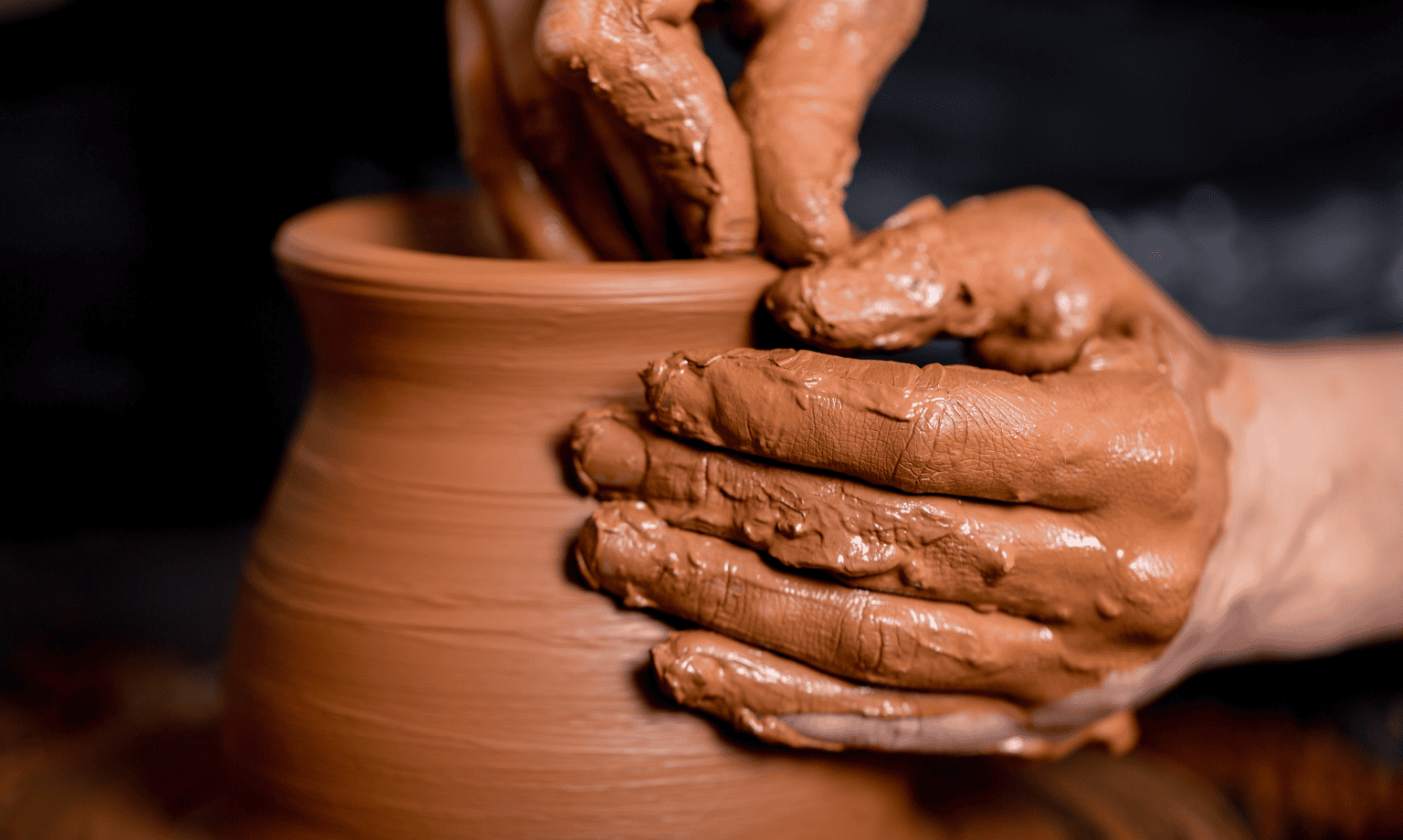
Once the clay is ready, the artisan transforms it into the desired form.
Depending on the workshop and object, you may see techniques such as:
Pottery-wheel shaping
Hand-building
Molding
Trimming and refining
Combining several techniques
The pottery wheel is particularly useful for producing round objects such as bowls, plates, cups, and vessels.
At this stage, the artisan has to control the clay carefully. Too much pressure can distort the form, while insufficient shaping can leave the object uneven.
After shaping, the object cannot immediately go into the kiln.
The clay needs time to dry. During this stage, moisture gradually leaves the material. If drying happens unevenly, the piece can develop cracks or become distorted.
This is one of those stages that may seem unimportant when you look at finished Safi ceramics, but it can have a major effect on the final result.
Once the piece reaches the appropriate stage, decoration can begin.
This is where the artisan’s artistic skill becomes especially visible.
Depending on the design, decoration may involve:
Painted motifs
Geometric patterns
Lines and repeated shapes
Floral-inspired elements
Engraved details
Colored finishes
Glazing
Safi’s ceramic identity is particularly associated with decorated pottery, and official tourism information highlights the city’s recognizable blue ceramic tradition.
A handmade design does not necessarily have to be perfectly identical from one piece to another. Slight variations can be part of the character of artisan production.
The tools used in pottery can be relatively simple, but using them effectively requires considerable practice.
| Pottery ToolPurpose | |
|---|---|
| Pottery wheel | Shapes round ceramic pieces |
| Clay knife | Cuts and trims clay |
| Wire cutter | Separates or trims clay |
| Wooden tools | Shapes and refines surfaces |
| Ribs | Smooths and compresses clay |
| Brushes | Applies decorative details |
| Kiln | Fires the finished pottery |
The tools themselves do not create the finished object. The artisan’s experience determines how they are used.
This is why two people can work with similar pottery tools and produce very different results.
Firing is one of the most important stages.
The dried clay is placed inside a kiln, where controlled heat transforms it into a more durable ceramic material. The precise firing conditions depend on factors such as the clay body, glaze, and production method.
Kiln management requires experience. Too much or too little heat, an unsuitable firing schedule, or problems with the piece can affect the final result.
UNESCO’s documentation on traditional ceramic craftsmanship emphasizes kiln management as a specialized skill within the wider production process.
For you as a buyer, this is an important reminder: the beautiful finished object represents many separate stages of technical work.
After firing, the artisan can inspect the finished object.
The piece may be checked for:
Cracks
Surface defects
Glaze problems
Shape irregularities
Decoration quality
Structural issues
Not every handmade variation is a defect. A small difference in brushwork or shape can simply reflect the handmade nature of the product.
The appeal of safi ceramic does not come only from its function. Decoration gives the object its visual identity.
You might see a simple bowl transformed by carefully arranged patterns or a serving plate covered with detailed painted elements.
Morocco’s National Tourist Office notes that ceramic shapes and colors vary from region to region, illustrating how local traditions contribute to the country’s broader ceramic heritage.
Traditional ceramics can work surprisingly well in contemporary interiors.
You can use them as:
Dining table pieces
Decorative bowls
Wall displays
Centerpieces
Serving dishes
Kitchen decoration
Restaurant or riad tableware
This combination of traditional craftsmanship and modern interior design helps keep ceramic traditions relevant to new audiences.
When you think about Moroccan ceramics, tajine pottery is likely one of the first objects that comes to mind.
A traditional tajine has a shallow base and a distinctive conical lid. Its form is strongly connected with Moroccan cuisine and the preparation and serving of slow-cooked dishes.
However, you should not assume that every ceramic tajine is suitable for cooking.
The general process can include:
Preparing the clay
Shaping the base
Creating the conical lid
Drying both parts
Decorating or glazing
Firing
Inspecting the finished product
If you plan to cook with a tajine, ask the seller whether the particular piece is intended for cooking and what type of heat it can safely handle.
When you buy Safi Morocco pottery, you may encounter both handmade and commercially manufactured products.
If you want an artisan-made piece, pay attention to the details.
Look for:
Slight variations between pieces
Individual brushwork
Small differences in shape
Hand-finished details
Distinctive decorative marks
Clear information about origin
These characteristics are not absolute proof of handmade production, so asking the seller about the workshop and production process is still useful.
Before purchasing a ceramic object, ask:
Where was it made?
Was it handmade?
Is it decorative or functional?
Is it suitable for food?
Can it be used for cooking?
Is it safe for the intended heat source?
How should it be cleaned?
Getting clear answers helps you choose the right piece for your needs.
Traditional crafts survive when knowledge continues to move from one generation to another.
Safi’s pottery ecosystem includes workshops, cooperatives, training institutions, cultural infrastructure, and the National Museum of Ceramics. UNESCO also identifies the city as a Creative City of Crafts and Folk Art, with initiatives focused on preserving traditional knowledge while encouraging innovation.
The National Museum of Ceramics is another reason Safi is important to anyone interested in Moroccan ceramic heritage. The Moroccan National Tourist Office describes it as holding pottery and ceramic objects from different parts of Morocco.
For you, visiting Safi can therefore offer more than shopping. You can see how an object is produced, learn about local craftsmanship, and understand why ceramics remain part of the city’s identity.
Safi is widely recognized as an important Moroccan center for pottery and ceramics. Its craft tradition includes functional, decorative, and architectural ceramic objects, with decorated pieces and blue-toned designs being particularly associated with the city.
The general process involves preparing clay, shaping the object, drying it, decorating or glazing it, firing it in a kiln, and inspecting the finished piece.
Common tools can include pottery wheels, clay knives, wire cutters, wooden shaping tools, ribs, brushes, and kilns. The exact tools depend on the workshop and production technique.
Safi ceramic is a regional expression within the broader world of Moroccan pottery. Moroccan pottery includes traditions from many different areas, each with its own techniques, designs, and materials.
Safi has a large artisan pottery sector with numerous workshops producing handmade ceramics, although commercially produced items can also be found in the market. If handmade production is important to you, ask the seller about the item’s origin and manufacturing process.
Traditional tajine vessels can be used for preparing and serving Moroccan food. Decorative tajines may have a different purpose, so you should confirm whether a specific piece is suitable for cooking before using it.
Look at the craftsmanship, decoration, finishing, and information about the product’s origin. Speaking directly with an artisan or knowledgeable seller can also help you understand how the piece was produced.
The story of Safi Pottery begins long before you see a finished bowl, plate, vase, or tajine on a shop shelf. It begins with clay and continues through preparation, shaping, drying, decoration, glazing, firing, and careful finishing.
What makes the tradition especially interesting is the human skill behind every stage. Safi’s pottery heritage has survived because artisans, families, workshops, cooperatives, and training institutions continue to transmit knowledge while adapting to changing markets. UNESCO’s current profile of Safi reflects both the historical importance of pottery and the city’s efforts to preserve and develop its craft sector.
The next time you hold a piece of Safi ceramics, take a closer look. Notice the pattern, the shape, the glaze, and the small details. They are part of a much longer journey—from raw earth to finished ceramic.
Explore Safi’s pottery heritage, discover authentic Moroccan ceramics, and choose a handmade piece that brings the craftsmanship of Morocco into your home.