When you hold a handmade Moroccan ceramic piece, you are holding more than clay shaped by an artisan. You are seeing a small part of a much larger story—one built around earth, water, fire, color, and generations of knowledge.
If you want to understand that story, the National Museum of Ceramics in Safi is one of the most interesting places you can visit. Safi has a centuries-old pottery tradition, and today the city remains closely associated with Moroccan ceramics and traditional craftsmanship. UNESCO describes pottery as an important part of Safi’s cultural identity, with traditional techniques continuing in areas such as the Potters Hill and Potters Village.
Whether you are interested in Moroccan history, traditional crafts, interior design, or simply looking for a different cultural experience, a visit to the museum gives you an opportunity to see how ceramic Morocco developed over time.
is a Moroccan museum dedicated primarily to pottery and ceramic heritage. It was established in 1990, and its collection includes archaeological and ethnographic pieces from different parts of Morocco. The museum is managed under the Fondation Nationale des Musées (FNM).
Rather than focusing only on Safi pottery, the museum allows you to discover a broader picture of Moroccan ceramics. Its collections have been enriched with objects from several Moroccan museums, including institutions in Tetouan, Tangier, Rabat, Meknes, Marrakech, and Fez. Local donations from Safi’s municipality, ceramic masters, and collectors have also contributed to the collection.
This makes the museum particularly valuable if you want to compare different Moroccan ceramic traditions in one place.
The museum helps preserve objects and knowledge connected to one of Morocco’s oldest artistic traditions.
When you walk through a ceramic collection, you can see how pottery served different purposes throughout Moroccan history:
The museum also helps you understand that Moroccan ceramics are not one single style. Designs, techniques, colors, and forms can change from one region to another.
Safi is particularly important when you talk about Moroccan pottery. The city’s relationship with ceramics goes back centuries, and archaeological discoveries provide evidence of ceramic production in the area at least as far back as the Almoravid period. According to the Fondation Nationale des Musées, archaeological discoveries at Lalla Hniya Hamriya helped demonstrate the historical depth of ceramic activity in Safi.
The city later developed into one of Morocco’s best-known centers for ceramic production.
UNESCO’s Creative Cities Network notes that pottery has been practiced in Safi for centuries and remains an important part of its cultural and economic identity. Traditional shaping, glazing, and firing techniques continue to be practiced, while artisans also adapt to changing technologies and markets.
When you explore Safi ceramic, you will notice that the craft combines practical objects with highly decorative work.
Traditional Safi pottery can include:
Blue and white decoration is strongly associated with Safi pottery, although the city’s ceramic tradition is much broader than a single color combination. UNESCO specifically highlights blue and white motifs among the recognizable characteristics of Safi pottery.
For you as a visitor, this is one of the most interesting parts of exploring Safi: you can see how a functional object can become a work of art through decoration and craftsmanship.
Moroccan ceramics developed through a long interaction between local resources, craftsmanship, trade, culture, and artistic influences.
Safi’s location also played a role. The city developed as an Atlantic port where maritime activity, commerce, agriculture, industry, and craftsmanship came together. Its surrounding resources provided suitable materials for pottery production.
For centuries, pottery was closely connected to everyday life. Before modern manufacturing, ceramic objects were essential for storing, preparing, serving, and transporting goods.
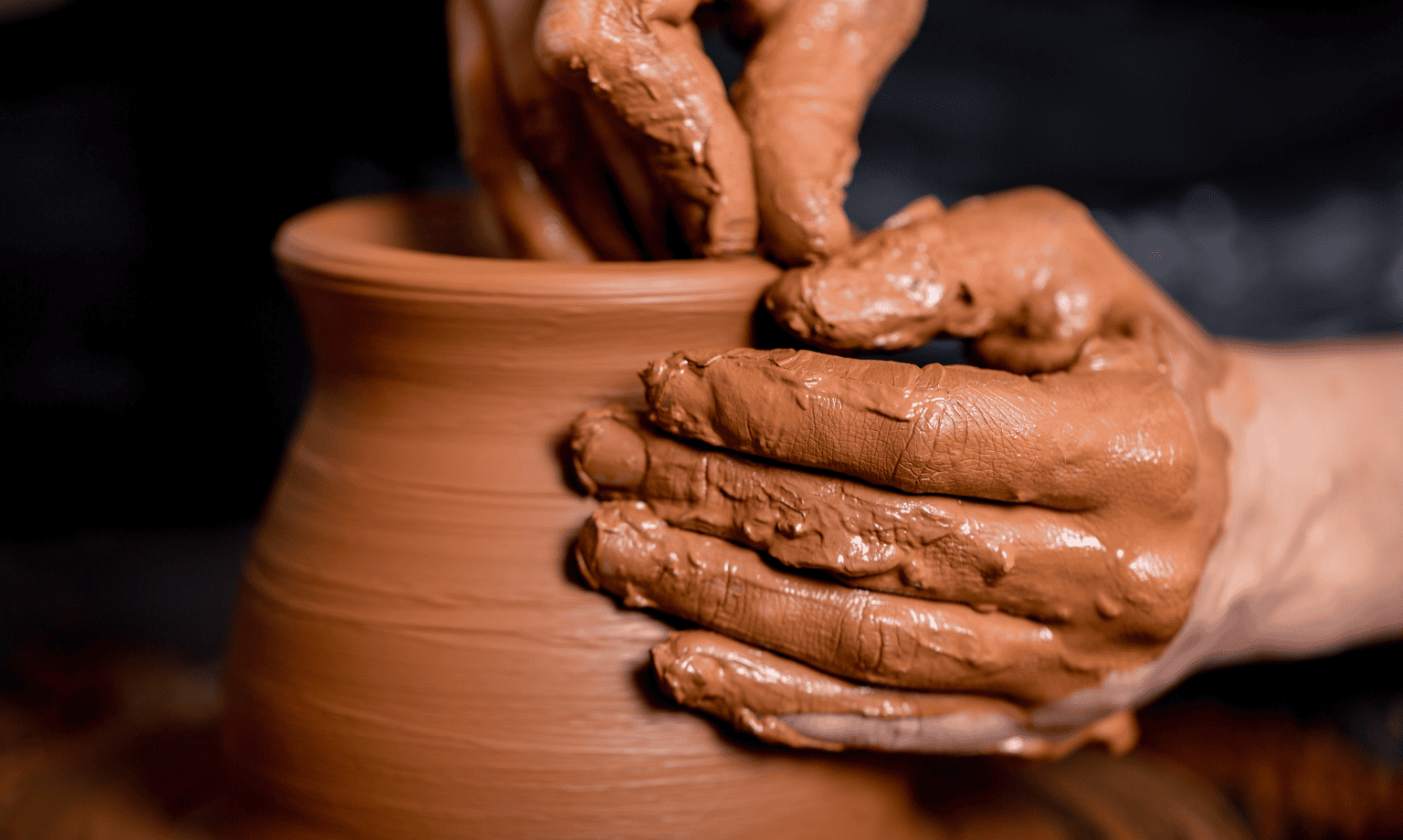
The basic process might appear simple:
Yet every stage requires experience. The quality of the clay, the shape of the object, the decoration, and the firing temperature can all affect the final result.
Over time, pottery moved beyond purely practical uses. Moroccan artisans developed increasingly sophisticated decorative traditions, with geometric designs, repeated patterns, glazed surfaces, and regional characteristics becoming part of Moroccan visual culture.
Safi eventually became particularly associated with ceramic craftsmanship. The Fondation Nationale des Musées notes that the arrival of master ceramist Boujemaa Lamali had a major influence on Moroccan ceramics. His work led to the establishment of a ceramic school in Safi in 1920, helping train generations of ceramicists.
This history explains why Safi is still such an important destination when you want to learn about ceramic Morocco.
A visit to the museum gives you the chance to explore ceramic objects from different periods and regions.
The collections are both archaeological and ethnographic, allowing you to look at ceramics not only as decorative objects but also as evidence of how people lived and created throughout Moroccan history.
Depending on the collection and exhibition, you may encounter objects representing different functions and styles, including:
Instead of simply looking at an attractive plate or vase, try to ask yourself three questions:
Where was it made?
What was it used for?
How was it decorated?
Those questions can transform your museum visit from a quick sightseeing stop into a much richer cultural experience.
Moroccan ceramics are especially interesting because decoration often carries a strong visual identity.
You may see:
The details matter. A small change in color or pattern can tell you something about the region, period, or artistic tradition behind an object.
If you are exploring Moroccan crafts, you may come across the term ceramique Marrakech as well as Safi ceramic. These should not automatically be treated as identical traditions.
Marrakech is famous for its souks, artisan workshops, interior design, and wide range of Moroccan handicrafts. Safi, meanwhile, has an especially strong historical identity connected to pottery and ceramic production.
| Feature | Safi Ceramic | Ceramique Marrakech |
|---|---|---|
| Main identity | Strongly connected to Safi’s pottery heritage | Connected to Marrakech’s broader artisan and design culture |
| Traditional focus | Pottery and ceramic craftsmanship | Ceramics alongside many other Moroccan crafts |
| Typical visual identity | Blue and white motifs are strongly associated with Safi | More varied depending on artisan and product |
| Cultural experience | Pottery heritage and ceramic production | Souks, design, crafts, and traditional Moroccan interiors |
| Best for | Learning about Safi’s ceramic tradition | Exploring a wider Moroccan craft scene |
The comparison is useful if you are planning a cultural trip. You do not have to choose one over the other. Each city offers a different way to experience Moroccan craftsmanship.
When researching Moroccan ceramics online, you may also encounter Super Cerame Berrechid. It is important to distinguish this type of modern industrial ceramic production from the traditional artisan pottery represented by the National Museum of Ceramics.
Traditional pottery is generally associated with individual artisans, workshops, handmade processes, and cultural heritage. Modern ceramic manufacturing operates on a much larger industrial scale.
| Traditional Ceramics | Industrial Ceramics |
| Artisan-led production | Factory-based production |
| Often handmade | Mechanized and standardized |
| Strong regional identity | Designed for large-scale markets |
| Decorative and cultural value | Construction and commercial applications |
| Small workshops | Industrial facilities |
This difference helps you understand the broader ceramic sector in Morocco. A country can preserve traditional pottery while also developing a modern ceramic manufacturing industry.
Another search term you may encounter is Cerame Agadir. Like other regional ceramic businesses and manufacturers, it belongs to the wider modern ceramic landscape rather than representing the specific heritage preserved inside the National Museum of Ceramics.
This distinction is useful when researching Moroccan ceramics online.
You can think about the industry in two broad categories:
Both are part of the broader story of ceramics in Morocco, but they serve different purposes.
The interest in ceramics does not stop at Morocco’s borders. Around the world, collectors, designers, architects, museums, and craft enthusiasts continue to explore ceramic traditions.
The phrase Ceramics International can refer to the wider global world of ceramic art, technology, research, and production. Within that international context, Moroccan ceramics offer something particularly distinctive: a combination of traditional craftsmanship, regional identity, color, and decorative design.
Safi’s ceramic sector already has an international dimension. UNESCO reports that the city’s pottery economy includes more than 200 workshops and over 200 points of sale, with products reaching international destinations through exports.
Moroccan ceramics can appeal to international audiences because they combine:
For you as a buyer or traveler, this also means that a ceramic piece can serve as both a practical object and a reminder of a particular place.
The importance of the museum extends beyond displaying beautiful objects.
A museum preserves physical evidence of techniques, styles, and traditions that might otherwise become difficult to study. The National Museum of Ceramics brings together archaeological and ethnographic pieces from different Moroccan collections, while local donations have helped strengthen its connection to Safi’s own ceramic community.
Safi’s wider creative ecosystem also includes training institutions and artisan communities. UNESCO notes that traditional ceramic knowledge continues to be passed through families, cooperatives, and educational institutions.
That matters because craftsmanship survives when knowledge is transmitted—not simply when finished products are displayed.
If you are visiting Safi, the museum deserves a place on your itinerary.
You should consider visiting if you want to:
The museum is also a useful starting point before exploring the city’s artisan areas. UNESCO identifies the Potters Hill and Potters Village as important places where traditional ceramic techniques continue to be practiced.
Before you travel, check the latest information from the Fondation Nationale des Musées because opening hours and ticket policies can change.
According to the FNM’s current museum page, the museum is located at Avenue Al Medina El Mounawara, Cité des Arts, Safi. The listed opening schedule is 10:00 a.m. to 6:00 p.m., with Tuesday closed. The FNM currently lists a standard ticket at 30 MAD, a reduced ticket at 15 MAD, and a day pass at 50 MAD; children under six are listed as free.
| Visitor Information | Current FNM Information |
| Museum | National Museum of Ceramics |
| City | Safi, Morocco |
| Address | Avenue Al Medina El Mounawara, Cité des Arts |
| Opening hours | 10:00–18:00 |
| Closed | Tuesday |
| Standard admission | 30 MAD |
| Reduced admission | 15 MAD |
| Day pass | 50 MAD |
| Children under 6 | Free |
Because practical information can be updated, verify the details directly with the museum before making a special trip.
You can make your visit more memorable by treating the museum as part of a larger Safi experience.
Safi’s cultural landscape includes its historic medina, coastal fortifications, artisan districts, and other places connected with the city’s history. UNESCO highlights the coexistence of the city’s maritime heritage, historic urban fabric, and craft traditions.
You could organize your day like this:
This approach lets you connect what you see in the museum with the living craft tradition outside its walls.
If you decide to purchase pottery after visiting the museum, take your time.
A few practical questions can help:
Do not assume that every ceramic object sold in a tourist area was made locally. If authenticity matters to you, ask the seller about the workshop, artisan, and production process.
A handmade object may also have small variations. Rather than seeing these as imperfections, you can see them as evidence of the human hand behind the piece.
The National Museum of Ceramics is a museum in Safi dedicated mainly to Moroccan pottery and ceramic heritage. It contains archaeological and ethnographic collections from Morocco and has been operating since 1990.
The museum is located at Avenue Al Medina El Mounawara, Cité des Arts, Safi.
Safi has a centuries-old pottery tradition. Archaeological evidence demonstrates historic ceramic activity in the region, while the city later developed into a major center of Moroccan ceramic craftsmanship.
You can explore archaeological and ethnographic pottery and ceramic objects representing Moroccan ceramic heritage. The collection includes objects originating from several Moroccan museums as well as local acquisitions and donations.
Yes. Moroccan ceramic traditions vary by region. Safi has a particularly strong pottery identity, with blue and white motifs among the characteristics associated with its ceramic tradition.
Traditional ceramics are generally associated with artisans, workshops, handmade techniques, and cultural heritage. Industrial ceramics are produced on a larger scale using standardized manufacturing processes and often serve construction or commercial applications.
Yes, Safi has an active pottery sector with workshops and points of sale. UNESCO reports more than 200 workshops and more than 200 points of sale connected to the city’s pottery sector.
The museum preserves archaeological and ethnographic ceramic objects and brings together collections from different Moroccan institutions. Safi’s broader ceramic ecosystem also supports the transmission of traditional knowledge through artisans, cooperatives, and training institutions.
The National Museum of Ceramics gives you a chance to see Moroccan pottery from a different perspective. Instead of viewing ceramics simply as plates, bowls, tiles, or decorative objects, you can begin to understand the history and human skill behind them.
Safi is particularly special because pottery remains part of the city’s living identity. The craft is visible not only in museums but also in workshops, artisan communities, training institutions, and local businesses. UNESCO’s recognition of Safi as a Creative City of Crafts and Folk Art further reflects the importance of this living tradition.
From Safi ceramic to the wider world of ceramic Morocco, the story connects traditional craftsmanship with contemporary design and international interest. Even when you compare it with modern names and industries such as Super Cerame Berrechid or regional searches such as Cerame Agadir, the distinction becomes clear: Morocco’s ceramic identity includes both centuries-old artisan knowledge and modern production.
So, if you are planning a trip to Safi, do more than look for beautiful pottery. Visit the National Museum of Ceramics, explore the city’s artisan heritage, and take the time to discover the people and traditions behind Moroccan ceramics. You may leave with a souvenir, but more importantly, you will leave with a better understanding of why clay has played such an enduring role in Morocco’s cultural story.