Have you ever looked at a handmade bowl, a porcelain cup, or a decorative ceramic tile and wondered whether it should be called pottery or ceramic? The two words are often used as if they mean exactly the same thing, but there is an important difference between them.
Once you understand ceramics vs pottery, you can look at clay objects differently. You begin to notice the material, the way a piece was shaped, the firing process, and even the purpose behind its design. From an ancient storage jar to a modern piece of art ceramics, clay has remained one of the most versatile materials humans have worked with.
So, if you are interested in handmade pottery, Moroccan ceramics, ceramic art, or simply want to understand the history of ceramics, this guide will help you separate the two terms and understand how they are connected.
The word ceramic describes a broad family of materials and objects made from inorganic, non-metallic substances that are processed and generally hardened through heat.
When you think of ceramic, you might immediately picture a coffee mug or a dinner plate. However, ceramics cover a much wider range of products.
You can find ceramics in:
Pottery
Porcelain
Stoneware
Earthenware
Ceramic tiles
Bricks
Sanitaryware
Sculptures
Electrical components
Industrial products
Decorative objects
This is the first important point to remember: ceramics is the broader category.
Although ceramic products can look completely different from one another, many share a similar basic process. A material is prepared, shaped, dried or otherwise processed, and then subjected to heat or another treatment that gives the finished product its desired properties.
The result can be:
Hard
Heat resistant
Durable
Chemically stable
Decorative
Functional
The exact properties depend on the materials, manufacturing method, and firing conditions.
A simple way to remember the relationship is:
Ceramics = the larger family. Pottery = one part of that family.
This means that a ceramic tile can be ceramic without being pottery, while a traditional clay bowl can be both pottery and ceramic.
Pottery is generally associated with objects made from clay that have been shaped and fired in a kiln. The term is commonly used for vessels and similar objects created for practical, decorative, or artistic purposes.
When you visit a traditional pottery workshop, you might see artisans producing:
Plates
Bowls
Cups
Jars
Pots
Vases
Tagines
Storage vessels
Pottery can be made entirely by hand, on a pottery wheel, or with molds and other techniques.
The biggest distinction is its close relationship with clay and vessel-making.
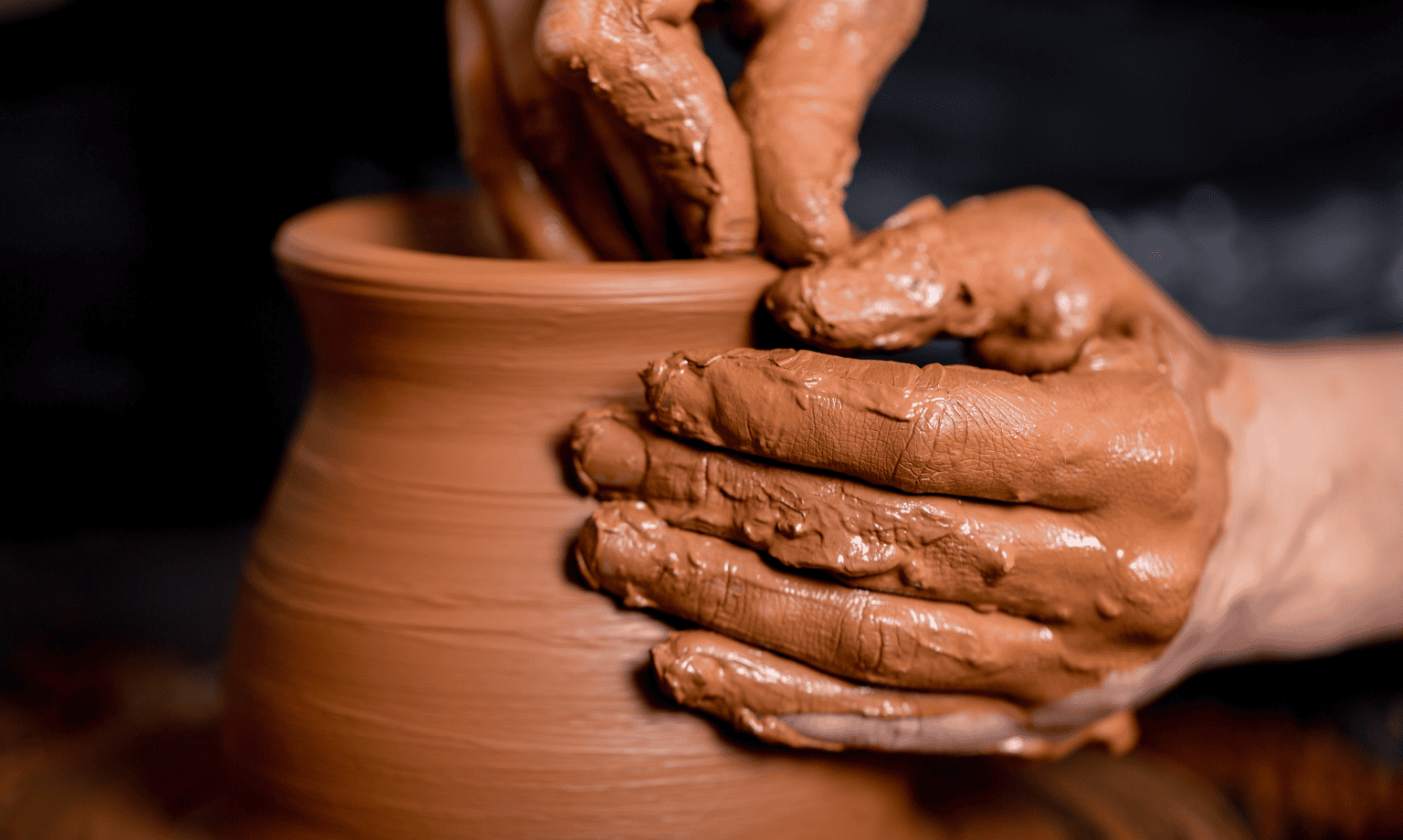
A potter may begin with a lump of prepared clay and gradually transform it into a functional object. The piece then dries before being fired, and it may receive glaze or painted decoration.
The process can involve several stages:
Preparing the clay
Shaping the form
Drying
Decorating
Glazing
Firing
Finishing
When you buy handmade pottery, you are often buying something with characteristics that make it different from factory-produced products.
You may notice:
Small variations in shape
Individual brushwork
Slight differences between pieces
Unique surface textures
Distinctive glaze patterns
These differences are part of the appeal of handmade work. They show that the object was produced through a human process rather than being perfectly replicated by a machine.
A handmade bowl does not need to look exactly like another bowl from the same collection.
If the piece is structurally sound and well finished, small variations can actually give it more personality. This is particularly noticeable in traditional pottery, where the artisan’s technique becomes part of the appearance of the finished object.
Now that you know the basic definitions, the distinction becomes much easier.
Ceramics is the broad term covering many fired or processed non-metallic materials.
Pottery generally refers to ceramic objects made primarily from clay, particularly vessels and similar handmade or manufactured forms.
| Feature | Ceramics | Pottery |
|---|---|---|
| Meaning | Broad category | Category within ceramics |
| Main materials | Various ceramic materials | Primarily clay |
| Examples | Tiles, porcelain, pottery, technical ceramics | Pots, bowls, plates, jars |
| Uses | Industrial, artistic, architectural, domestic | Mainly functional and decorative |
| Production | Handmade or industrial | Handmade, wheel-thrown, molded, or industrial |
| Artistic use | Includes sculptures and art ceramics | Can also be artistic |
| Cultural role | Varies by product | Often strongly connected to local traditions |
The easiest way to remember the difference is to think of ceramics as a family. Pottery is one member of that family.
Yes.
Traditional pottery made from clay and fired in a kiln is a form of ceramic.
The confusion usually happens because people use “ceramic” as a general word for household products, while “pottery” is often used when talking specifically about clay vessels and traditional craftsmanship.
Not every ceramic object behaves in the same way. Different clay bodies and materials produce different results.
Earthenware is generally fired at lower temperatures than stoneware and porcelain. It can remain relatively porous unless it is glazed.
You often see earthenware associated with traditional pottery and decorative pieces.
Stoneware is fired at higher temperatures and generally produces a stronger, less porous body.
It is widely used for:
Dinnerware
Mugs
Bowls
Baking dishes
Decorative pottery
Porcelain is a refined ceramic material known for its dense body, smooth surface, and often white appearance.
It can be used for:
Fine tableware
Decorative objects
Artistic pieces
Bathroom fixtures
Technical applications
When you choose a ceramic object, the material affects its:
Strength
Weight
Porosity
Texture
Appearance
Heat resistance
Intended use
This is why you should not assume that every ceramic piece is suitable for cooking, microwaving, or serving food.
Although production methods vary considerably, traditional pottery follows a recognizable sequence.
The artisan first prepares the clay so it has a workable consistency.
Depending on the material, this can involve removing unwanted particles, adding water, mixing, and kneading or wedging the clay.
The clay can then be shaped using different techniques.
Common methods include:
Hand-building
Wheel throwing
Molding
Pressing
A potter working on a wheel can create symmetrical vessels, while hand-building allows more freedom with shapes and textures.
Freshly shaped clay contains considerable moisture. Before firing, the object needs to dry.
This stage requires care because uneven or overly rapid drying can cause cracking or deformation.
Once the form is ready, the artisan can decorate the surface.
Techniques may include:
Painting
Carving
Engraving
Stamping
Applying colored slips
Creating raised textures
In traditional pottery cultures, decoration can also communicate regional identity.
Glaze is a glass-forming coating applied to many ceramic pieces before a firing stage.
It can change the appearance of the object while also helping create a smoother, less porous surface.
A glaze can provide:
Color
Shine
Texture
Protection
Water resistance
The final major stage is firing.
The piece enters a kiln where controlled heat causes significant physical and chemical changes. The clay body becomes a permanent ceramic material, while glazes can melt and develop their final surface.
A piece of soft clay can be reshaped with your hands. Once it has been properly fired, that is no longer possible.
Firing is therefore one of the defining steps separating raw clay from finished ceramic work.
The history of ceramics stretches back thousands of years.
Long before modern factories existed, people discovered that clay could be shaped into useful objects and hardened through fire. Early pottery served practical needs, including food preparation, storage, cooking, and transporting liquids.
Archaeological discoveries have revealed ancient ceramic vessels across many parts of the world.
For early communities, pottery could solve everyday problems.
Clay vessels could be used for:
Storing grain
Carrying water
Cooking food
Preserving supplies
Serving meals
Ritual activities
Over time, pottery also became a way to express identity and artistic creativity.
Ceramic traditions developed independently and through cultural exchange across regions including:
Mesopotamia
Ancient Egypt
China
Greece and the wider Mediterranean
North Africa
The Islamic world
Each region developed its own approaches to clay preparation, decoration, glazing, and firing.
As technology improved, artisans developed better kilns, more sophisticated glazes, and increasingly complex decorative techniques.
Porcelain production, for example, became particularly important in China and later influenced ceramic production elsewhere.
Today, ceramic manufacturing ranges from traditional handcraft to highly technical industrial production.
Not every ceramic object is designed to serve a practical purpose.
Some pieces are created primarily to communicate an artistic idea.
Art ceramics refers to ceramic work where artistic expression is a central purpose.
An artist might create:
Ceramic sculptures
Experimental vessels
Decorative forms
Large installations
Conceptual ceramic pieces
The object may not be intended for everyday use at all.
Functional pottery, on the other hand, is designed to be used.
Examples include:
Plates
Cups
Bowls
Cooking vessels
Jars
Serving dishes
However, the distinction is not always strict.
Absolutely.
A handmade bowl can be practical and artistic at the same time.
Its shape, proportions, glaze, decoration, and surface texture can all reflect the potter’s creative decisions.
This is one reason pottery remains fascinating: function and art do not have to be separate.
If you are shopping for pottery, you may notice a major difference between handmade pieces and factory-made ceramics.
| Characteristic | Handmade Pottery | Mass-Produced Ceramics |
|---|---|---|
| Production | Artisan-led | Industrial |
| Shape | May vary slightly | Highly consistent |
| Decoration | Often hand-applied | Often machine-applied |
| Quantity | Usually smaller | Large-scale |
| Appearance | Individual | Uniform |
| Craftsmanship | Central to the product | Often less visible |
| Cultural connection | Often strong | Depends on the product |
You might choose handmade pottery because you want:
A unique object
Traditional craftsmanship
A connection to a specific culture
Hand-painted decoration
Individual character
A meaningful gift
If you are buying pottery from a place such as Safi, Morocco, you are also supporting a craft tradition that has developed through generations of local artisans.
Morocco provides a good example of how the two concepts overlap.
Traditional Moroccan pottery includes functional and decorative objects made from clay, while Moroccan ceramics can also include tiles and architectural decoration.
You can find pottery used for:
Cooking
Serving food
Storage
Decoration
Interior design
Moroccan pottery is often recognizable through its regional forms, colors, and decorative patterns.
Safi is particularly well known for its pottery and ceramic craftsmanship.
If you visit the city, you can encounter workshops producing:
Ceramic plates
Bowls
Tagines
Vases
Decorative objects
Architectural ceramics
The city’s pottery tradition shows how handmade pottery can preserve cultural knowledge while still adapting to contemporary tastes.
The appeal comes from more than the finished object.
You can see the connection between:
Local craftsmanship
Traditional techniques
Decorative art
Cultural history
Everyday life
A handmade ceramic plate can therefore be both a useful household object and a small representation of Moroccan artistic heritage.
When you see a ceramic object, you can ask yourself several questions.
Check the body of the piece.
Is it:
Rough or smooth?
Heavy or lightweight?
Porous or dense?
Coarse or refined?
These clues can help you understand the type of ceramic material used.
Traditional pottery often takes the form of a vessel.
Ceramics as a broader category can take almost any form, including:
Flat tiles
Sculptures
Bricks
Plates
Technical components
Architectural pieces
Ask what the object was designed to do.
Was it created for:
Cooking?
Eating?
Storage?
Decoration?
Architecture?
Artistic expression?
Industrial use?
A single object can belong to several descriptions.
For example, a hand-painted Moroccan bowl can be:
Ceramic + pottery + handmade + functional + artistic.
These words describe different characteristics rather than completely separate categories.
No. Pottery is generally considered a type of ceramic work, while ceramics covers a much broader range of materials and products.
Porcelain is a type of ceramic material. Porcelain objects can be vessels and may resemble pottery in their use, but porcelain is generally distinguished from traditional earthenware pottery by its material and firing characteristics.
Yes. Once a clay object has been properly fired, handmade pottery is a form of ceramic.
Clay is a raw material. Ceramic refers to the hardened material produced after clay or another suitable ceramic material has been processed and fired.
It is not really an apples-to-apples comparison. Pottery is itself a type of ceramic. Strength depends on the particular material, firing temperature, construction, thickness, glaze, and intended use.
Your choice depends on what you need.
Individual character
Traditional craftsmanship
Unique decoration
Artisan-made products
A cultural connection
A one-of-a-kind appearance
Uniform dimensions
Specialized technical properties
Consistent industrial production
Architectural applications
Large quantities of identical pieces
Before purchasing a ceramic or pottery piece, check:
Material
Intended purpose
Glaze quality
Cracks or structural damage
Food-safety information
Whether it is handmade
Country or region of production
Care instructions
If you plan to cook with the piece, ask specifically whether it is suitable for the type of heat you intend to use.
So, ceramics vs pottery does not have to be confusing.
The easiest answer is that ceramics is the wider category, while pottery is one type of ceramic work, usually associated with clay vessels and traditional craftsmanship.
Once you understand this distinction, the world of clay becomes much easier to explore. You can appreciate the difference between earthenware and porcelain, understand why handmade pottery has individual character, and recognize how art ceramics can transform clay into an expressive form.
The history of ceramics also shows just how important this material has been to human civilization. From ancient storage vessels to modern sculptures and Moroccan handmade pottery, ceramics continue to combine usefulness, technology, tradition, and artistic expression.
Next time you pick up a ceramic plate, bowl, vase, or handmade pottery piece, take a moment to look beyond its surface. Think about the clay, the hands that shaped it, the heat that transformed it, and the tradition behind it. You may discover that a simple ceramic object has a much bigger story than you first imagined.