When you walk through Safi, you quickly notice that pottery is not simply something displayed in a shop window. It is part of the city’s character. You can hear the activity around artisan workshops, see colorful ceramics in local stores, and discover traditional pieces shaped by skills passed from one generation to another.
For you as a traveler, exploring Safi Morocco pottery gives you a different way to understand the city. Instead of seeing Safi only as an Atlantic coastal destination, you can discover it through its artisans, historic medina, pottery districts, and ceramic heritage.
Safi combines history, architecture, maritime culture, and craftsmanship in a way that makes the city particularly interesting. The Moroccan National Tourist Office describes Safi as one of Morocco’s ceramic capitals and highlights its pottery district, where artisans work with clay and terracotta.
Before exploring Safi Morocco pottery, it helps to understand the city itself. Safi sits on Morocco’s Atlantic coast and has a long history as a port and trading center.
The Atlantic has always influenced the city’s identity. When you explore the old medina, you can see how the historic urban fabric, Portuguese-era structures, markets, and traditional crafts exist alongside one another.
| Feature | Information |
|---|---|
| Country | Morocco |
| Location | Atlantic coast |
| Historic identity | Port city and trading center |
| Famous craft | Pottery and ceramics |
| Major attraction | Historic medina and Portuguese heritage |
| Cultural attraction | National Museum of Ceramics |
The official Moroccan tourism site highlights the old medina, Kechla, Portuguese Fort, Ksar El-Bahr, Potter’s Hill, and the National Museum of Ceramics among Safi’s attractions.
Safi’s history is closely connected to its position beside the Atlantic. Its historic architecture reflects different periods, including the Portuguese presence.
One of the city’s most recognizable landmarks is the Kechla. The Moroccan National Tourist Office describes its fortress as standing on the oceanfront for around five centuries. Ksar El-Bahr, the Portuguese Fort, and other structures also reflect Safi’s Portuguese-era history.
As you explore the old city, you can therefore experience several layers of history in a relatively compact area.
The medina offers another perspective. Narrow streets, traditional shops, craft activities, and historic architecture create an environment where you can see how commerce and craftsmanship have long been connected.
The same streets that attract visitors interested in history also lead you toward traditional pottery and ceramic products.
For many visitors, Safi Morocco pottery is one of the strongest reasons to explore the city.
The Moroccan National Tourist Office calls Safi one of Morocco’s capitals of ceramics and describes its pottery district as a place where artisans create objects from clay and terracotta.
The city’s ceramic identity comes from several elements:
Generations of artisan knowledge.
Dedicated pottery workshops.
Traditional clay-working techniques.
Decorative ceramic traditions.
A strong local market for pottery.
Continued interest from visitors and collectors.
The official Moroccan tourism guide also describes Safi’s artisans as passing their skills from generation to generation and identifies Potter’s Hill as an important home of pottery and ceramics.
This continuity is important. When you purchase a traditional piece, you are not simply buying an object; you are encountering a craft tradition that remains connected to the city’s identity.
If you search for souk fakhar safi or safi fakhar, you are looking for the local pottery-shopping experience associated with Safi’s ceramic tradition.
Rather than treating pottery as a single shop or product category, think of Safi’s pottery areas as a broader artisan environment where you can discover workshops, displays, and ceramic products.
Depending on the workshop or seller, you may encounter:
Ceramic bowls
Plates
Tagines
Vases
Cups
Flower pots
Decorative pottery
Painted ceramic objects
When you visit, give yourself enough time to compare different pieces. You may notice differences in shape, decoration, glaze, and finishing from one artisan or workshop to another.
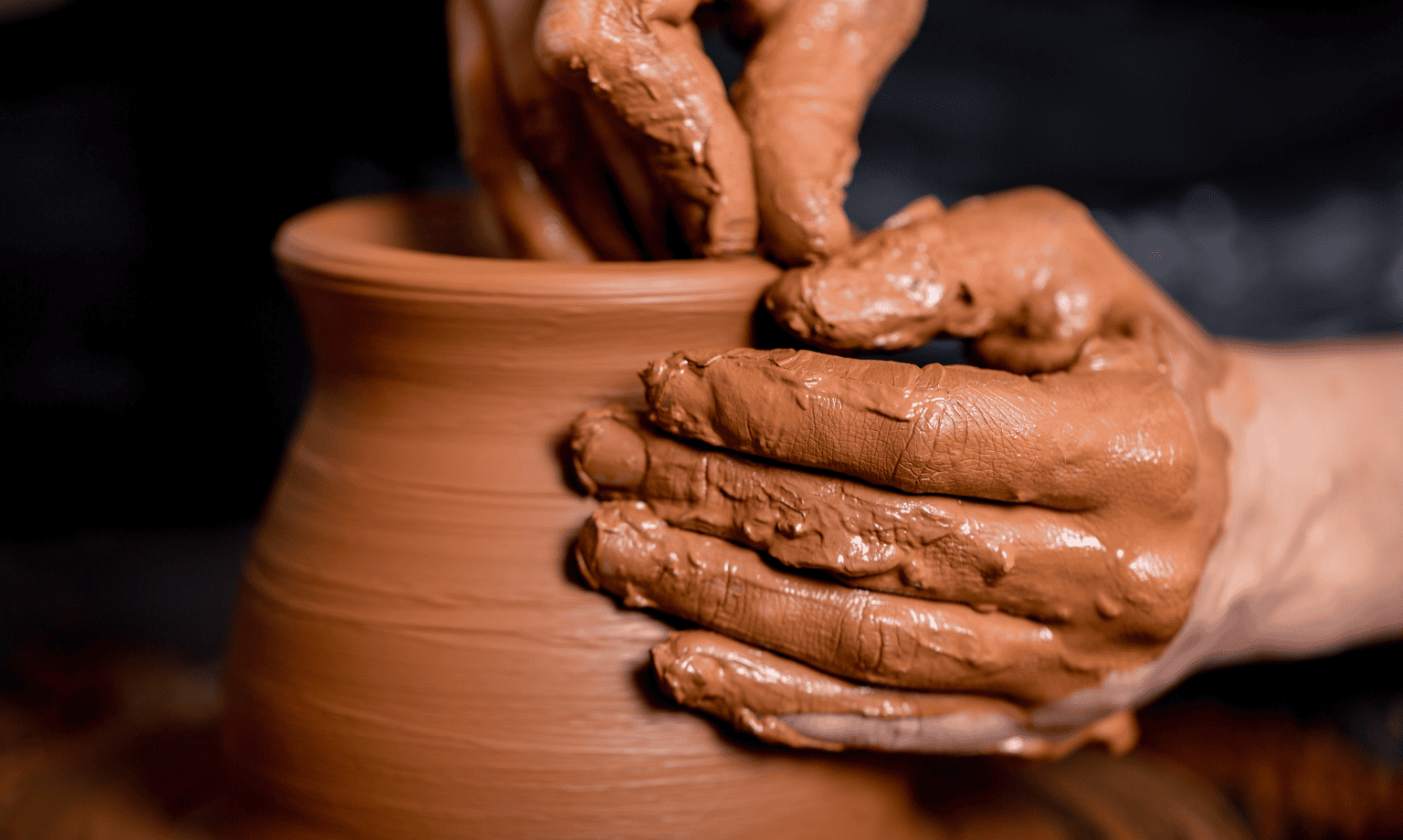
One of the most interesting parts of Safi Morocco pottery is the process behind the finished product.
Although techniques vary between workshops, traditional pottery generally requires several stages.
| Stage | What Happens |
|---|---|
| Clay preparation | The clay is prepared for shaping |
| Shaping | The artisan forms the object |
| Drying | Moisture is gradually removed |
| Decoration | Patterns and colors may be added |
| Glazing | A glaze can provide color and surface protection |
| Firing | Heat transforms the shaped clay into ceramic |
When you see the finished object in a shop, it is easy to overlook the amount of work involved in getting there.
The Moroccan tourism authority describes Safi’s pottery as an ancestral art and highlights the city’s distinctive ceramic products in different shapes and colors.
Safi ceramics can range from everyday household objects to highly decorative pieces.
When you look closely at a ceramic bowl or plate, you may notice how the shape, glaze, and decoration work together.
Common characteristics can include:
Colorful decoration.
Geometric patterns.
Glazed surfaces.
Hand-painted details.
Functional designs.
Decorative objects.
The Moroccan National Tourist Office notes that ceramic colors and shapes vary from one Moroccan region to another and specifically describes Safi as a destination for unique, multicolored pottery.
A ceramic bowl is a good example of how Moroccan craftsmanship can combine usefulness and decoration.
You might use one for serving food, display it as part of your home décor, or simply collect it because you appreciate its design.
That combination of practical use and artistic value is one of the strengths of traditional Moroccan ceramics.
To appreciate Safi Morocco pottery, you can also look at the wider history of ceramics in Morocco.
Pottery traditions differ considerably between regions. Colors, shapes, techniques, and decorative approaches are not identical throughout the country.
The official tourism authority points out regional differences, noting blue patterns in Fez, yellow tones in Safi, and green in Meknes, while describing Safi as a destination for unique multicolored pottery.
Today, traditional craftsmanship can coexist with contemporary design.
You may find artisans producing familiar forms while experimenting with:
New shapes.
Different decorative arrangements.
Contemporary home décor.
New combinations of colors.
Artistic ceramic objects.
This creates a bridge between traditional pottery and modern art ceramics.
Understanding ceramics vs pottery can make it easier for you to describe what you see in Safi.
Pottery generally refers to objects made from clay and shaped into vessels or other traditional forms before being fired. Ceramics is a broader term that can include pottery, tiles, sculptures, and other fired clay-based products.
| Pottery | Ceramics |
|---|---|
| Often associated with traditional vessels | Broader category |
| Commonly made from clay | Includes many clay-based products |
| Can be functional or decorative | Can be functional, artistic, or architectural |
| Strong connection to traditional crafts | Includes traditional and modern applications |
In everyday conversation, however, the two terms are often used interchangeably.
Safi is part of a much larger Moroccan pottery landscape.
If you travel around Morocco, you can discover different regional approaches to ceramics.
| Region | General Ceramic Characteristics |
|---|---|
| Safi | Strong pottery and ceramic tradition |
| Fez | Decorative ceramics and zellige traditions |
| Marrakech | Artisan markets and decorative crafts |
| Meknes | Traditional Moroccan craftsmanship |
| Rural regions | Local forms and community traditions |
This variety is one reason Moroccan pottery is so interesting. You can compare regional styles rather than expecting every Moroccan ceramic piece to look the same.
The term art ceramics is useful when discussing pieces where artistic expression becomes as important as practical function.
A bowl can be both a container and a work of art. A vase can be useful while also serving as a decorative centerpiece. A ceramic plate can move from the dining table to a wall display.
Modern ceramic design can reinterpret traditional Moroccan influences through:
Contemporary shapes.
Decorative installations.
Interior design.
Sculptural objects.
Experimental patterns.
The important point is that tradition does not have to remain frozen. Skilled artisans can preserve established techniques while responding to new tastes and markets.
You may encounter search terms such as concept cerame and grand cerame when researching ceramic products, companies, studios, or projects.
Their exact meaning depends on the context. If either term refers to a specific business or ceramic project, you should verify the entity before describing it as a traditional Safi technique.
From an SEO perspective, these terms can be included naturally where relevant, but they should not be presented as historical facts about Safi pottery without reliable evidence.
When you buy handmade pottery, you should look beyond the first impression.
A handmade object may have subtle differences that distinguish it from factory-produced ceramics.
Look for:
Slight variations in shape.
Individual brushwork.
Small differences between similar pieces.
Distinctive glaze variations.
Artisan information.
Evidence of workshop production.
| Feature | Handmade Pottery | Mass-Produced Pottery |
|---|---|---|
| Production | Artisan-based | Industrial |
| Shape | May vary slightly | Highly uniform |
| Decoration | Often individually applied | Standardized |
| Character | Individual | Consistent |
| Cultural connection | Often stronger | Usually limited |
Small variations are not necessarily flaws. In many cases, they are part of the character of an artisan-made object.
If you are already in the city and search for handmade pottery near me, use local search tools to find nearby workshops and shops.
Try searches such as:
“handmade pottery near me”
“pottery shop near me”
“Safi ceramics”
“Safi pottery”
“ceramic workshop Safi”
You can also ask residents, hotel staff, or local guides where artisans and pottery workshops are located.
Before visiting a pottery shop, check:
Customer reviews.
Business location.
Opening hours.
Product photographs.
Whether products are handmade.
Whether the seller provides information about the workshop.
If you are researching Farcil as a local pottery business or online shop, this can be presented as part of the modern side of Safi’s ceramic market.
A business-focused section can introduce:
Handmade Moroccan ceramic products.
Product categories.
Ceramic bowls and plates.
Decorative pottery.
Online purchasing.
The relationship between local craftsmanship and modern e-commerce.
When publishing this section, verify the business’s current products, location, shipping options, and other commercial information rather than relying on outdated details.
You may also encounter Marrakech Safi when planning a trip. Marrakech-Safi is Morocco’s administrative region, and both Marrakech and Safi belong to it. The official tourism site lists the region as “Marrakesh-Safi.”
Marrakech is famous for its medina and busy souks, while Safi offers a more focused connection with pottery and its Atlantic setting.
If you travel between the two, you can experience different sides of Moroccan craftsmanship.
The Moroccan National Tourist Office currently lists the Marrakech-to-Safi route at about 157 km and approximately 2 hours 15 minutes by its travel information.
If you want to understand Safi Morocco pottery beyond shopping, include the National Museum of Ceramics in your visit.
The Moroccan National Tourist Office describes the museum as home to a rich collection of pottery and ceramic objects from across Morocco, including ethnographic and archaeological pieces.
A museum visit allows you to place Safi’s local craftsmanship within the wider history of Moroccan ceramics.
You can compare:
Traditional forms.
Regional styles.
Decorative techniques.
Historical objects.
Different ceramic traditions.
Buying a piece of Safi Morocco pottery can connect you with a living craft tradition.
The value is not only in the object itself. It is also in the knowledge required to make it.
When you support local artisans, you can contribute to:
Preserving traditional skills.
Supporting small workshops.
Maintaining local craft knowledge.
Encouraging future generations of artisans.
Keeping Moroccan cultural traditions visible.
The official Moroccan tourism guide emphasizes that Safi’s artisans transmit their mastery from generation to generation.
After buying your ceramic piece, proper care helps preserve it.
You should:
Use gentle cleaning methods.
Avoid abrasive materials.
Follow the seller’s instructions.
Confirm whether the item is dishwasher-safe.
If you purchase a ceramic bowl, plate, or serving dish, ask whether it is suitable for food contact. Not every decorative ceramic object is intended for eating or cooking.
For cooking pieces, confirm whether the specific item is suitable for the intended heat source.
Safi Morocco pottery is known for its long-standing artisan tradition, colorful ceramics, clay and terracotta products, and strong connection with the city’s cultural identity. Morocco’s official tourism authority describes Safi as one of the country’s ceramic capitals.
You can explore the pottery district, Potter’s Hill, artisan workshops, traditional markets, and specialized pottery shops. The official tourism site identifies Potter’s Hill as one of Safi’s main attractions.
Much of Safi’s traditional pottery is associated with artisan craftsmanship, although exact production methods vary between workshops. Traditional skills continue to play an important role in the city’s pottery industry.
Pottery is generally considered part of the broader ceramic category. Pottery commonly refers to clay vessels and traditional objects, while ceramics can include pottery, tiles, sculptures, and other fired materials.
You can search Google Maps for local pottery workshops, pottery shops, and ceramic stores. You can also ask local residents or accommodation providers for recommendations.
You may find ceramic bowls, plates, tagines, vases, cups, decorative pieces, and other Moroccan ceramic products. The exact selection varies by workshop and seller.
Yes. Moroccan pottery varies by region. Safi is particularly associated with pottery and ceramics, while Marrakech is better known for its broad range of souk-based artisan crafts. Both are valuable destinations for discovering Moroccan craftsmanship.
When you explore Safi Morocco pottery, you discover more than clay shaped into bowls, plates, or decorative objects. You encounter a craft tradition connected to the city’s history, its artisans, its medina, and its identity as an important Moroccan ceramic center.
You can walk through the historic areas, visit pottery workshops, explore Potter’s Hill, see the National Museum of Ceramics, and compare pieces before choosing something for your home.
Whether you are interested in safi pottery, safi ceramics, handmade pottery, or Moroccan cultural heritage in general, Safi gives you a chance to experience craftsmanship at its source.
Ready to discover Safi for yourself? Explore its pottery workshops, visit local ceramic areas, meet artisans, and choose a handmade Moroccan piece that brings a genuine part of Safi’s heritage into your home.