If you want to experience the real character of Safi, start with its pottery. Walk through the city’s ceramic districts and you will quickly notice that pottery is not simply something sold to visitors. It is part of the city’s identity, with artisans shaping, decorating, glazing, and firing clay using knowledge passed down through generations.
Souk Fakhar Safi is an ideal starting point when you want to discover this tradition for yourself. Whether you are searching for a traditional Moroccan plate, a handmade bowl, a decorative tagine, or simply a pottery shop where you can see local craftsmanship, Safi gives you plenty of opportunities to explore.
UNESCO recognizes Safi as a Creative City of Crafts and Folk Art and identifies pottery as an important part of its cultural identity. Its ceramic production is concentrated around places including the Potters Hill and Potters Village, with more than 200 workshops and over 200 points of sale reported across the sector.
The word fakhar (فخار) refers to pottery or earthenware in Arabic. Therefore, when you search for Souk Fakhar Safi, you are essentially looking for the world of pottery markets, workshops, artisans, and ceramic products associated with Safi.
Unlike a conventional retail store, a pottery souk can give you a closer look at the craft itself. You can compare different pieces, speak with sellers, watch artisans at work, and learn how an ordinary piece of clay becomes a finished Moroccan ceramic.
Safi has practiced pottery for centuries. Today, its production remains concentrated in specialized craft districts, particularly Potters Hill and Potters Village. Traditional shaping, glazing, and firing techniques continue to coexist with newer technical approaches.
When you visit, you may encounter:
Hand-painted plates
Ceramic bowls
Moroccan tagines
Vases
Jars
Decorative tiles
Serving dishes
Architectural ceramics
The combination of traditional techniques and distinctive decoration is what makes Safi pottery particularly interesting.
You can buy Moroccan ceramics in many places, but visiting Safi allows you to see where the craft is actually produced.
When you pick up a piece of handmade pottery, look closely at its surface. You may notice small variations in the shape, brushwork, or glaze.
These differences are often part of the charm.
Two plates produced by the same artisan may not be perfectly identical. Instead of seeing this as a defect, you can see it as evidence that a person shaped and decorated each piece.
Buying directly from pottery workshops and local sellers gives you an opportunity to support the people who keep Safi’s ceramic traditions alive.
UNESCO reports that the sector directly employs approximately 1,500–2,000 people and includes more than 200 workshops, alongside cooperatives, associations, and a network of more than 200 points of sale.
Your visit does not have to be limited to shopping.
Take your time. Watch how clay is shaped. Look at unfinished pieces drying before firing. Compare painting styles. Ask questions about where a particular piece was produced.
That simple approach can turn your search for a souvenir into a genuine cultural experience.
If you have limited time, concentrate your visit around Safi’s main pottery districts and established ceramic businesses.
Potters’ Hill (Colline des Potiers) is one of the most important places to explore if you want to understand Safi’s pottery tradition.
UNESCO specifically identifies Potters Hill as an area where ceramic production remains concentrated.
You can explore workshops, see finished products, and get a sense of how the pottery industry operates.
If your goal is to find authentic Safi pottery, this should be high on your list.
Potters’ Village is another important part of Safi’s ceramic landscape. UNESCO identifies it alongside Potters Hill as a concentration point for local ceramic production.
A current local listing also identifies Village des Potiers Safi as a handicraft location on Rue Hassan II, making it another useful point to consider when exploring Safi’s pottery scene. Village des Potiers Safi
If you want to see craftsmanship rather than simply browse finished products, look for workshops where artisans actually produce ceramics.
For example, Poterie Safi – Coopérative Al Mohit is currently listed as a pottery manufacturer in Safi. Poterie Safi – Coopérative Al Mohit
A workshop visit can give you a better understanding of:
Clay preparation
Wheel throwing
Shaping
Decoration
Glazing
Firing
If your priority is choice, explore the local pottery market area.
Marché de Poterie is currently listed as a pottery store in Safi, while Popular Pottery market place / تل الخزف is also listed in the same pottery area. Marché de Poterie Popular Pottery market place / تل الخزف
These locations can be useful when you want to compare different designs and products before choosing what to buy.
A dedicated pottery shop can be convenient when you already know what you want.
For example, Safi Poterie d’art Rbati is currently listed at Coline de Potiers near Bab Chaa’ba and specializes in pottery. Safi Poterie d’art Rbati
Hamada Poteries is another currently listed pottery store in Safi. Hamada Poteries
Business hours can change, so check current listings before making a dedicated trip.
Once you start exploring the pottery market, you may find far more variety than expected.
Painted ceramic plates are among the easiest pieces to recognize.
You can use them as:
Serving dishes
Decorative wall pieces
Table centerpieces
Moroccan-inspired interior accents
Look closely at the painting before buying. Hand decoration can give each plate its own personality.
A handmade bowl can be both practical and decorative.
You might use one for salads, fruit, snacks, or simply display it on an open shelf.
Tagines are strongly associated with Moroccan cooking and culture.
However, do not assume that every decorative tagine is designed for cooking. If you intend to use yours on a stove or in an oven, ask the seller specifically whether it is suitable for that purpose.
If you want something primarily decorative, a Safi ceramic vase can be an excellent choice.
You can place it in:
Your living room
Dining area
Entryway
Bedroom
Office
Safi’s ceramic tradition also extends beyond household tableware. UNESCO notes that local pottery encompasses utilitarian objects, architectural elements, and decorative pieces.
Understanding the production process makes it easier to appreciate what you are buying.
The artisan begins by preparing clay until it reaches a workable consistency.
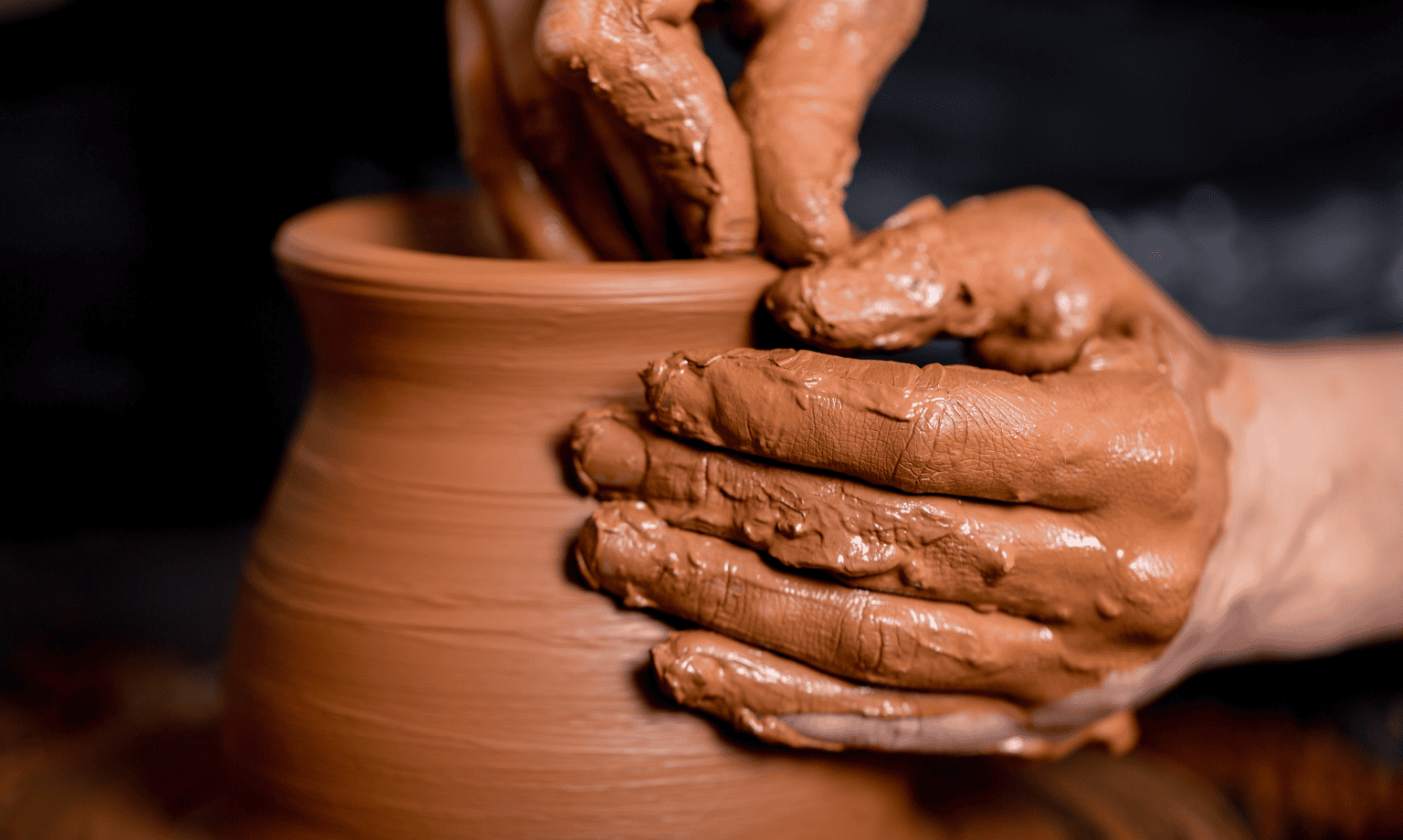
The clay is shaped into the desired form. Depending on the workshop and object, artisans may use a wheel or other traditional methods.
The shaped piece needs to dry before it can be fired. Careful drying helps reduce the risk of cracking and deformation.
This is where the ceramic begins to develop its recognizable identity.
Geometric compositions, floral details, borders, and other Moroccan-inspired motifs can be applied to the surface.
Glazing can provide color, shine, and protection.
Safi is particularly known for ceramic decoration that includes blue-and-white motifs, according to UNESCO.
Finally, the pottery is fired in a kiln. This transforms the prepared clay into a durable ceramic object.
You do not need to be a ceramics expert to make a better purchase.
Look for:
Slight variations in shape
Individual brush strokes
Hand-painted details
Unique glaze variations
Minor natural irregularities
Information about the workshop or artisan
Before paying, ask:
Where was this piece made?
Was it handmade?
Who produced it?
Is it intended for food?
Can it be used for cooking?
Is it suitable for an oven?
How should it be cleaned?
A handmade object should not necessarily look identical to an industrially manufactured product.
Small differences can be part of its character. What matters more is whether the piece is well made, structurally sound, and appropriate for the purpose you have in mind.
A little preparation can make your pottery shopping much easier.
Do not purchase the first piece you see.
Instead:
Visit several sellers.
Compare similar products.
Check the quality of the glaze.
Look at the decoration closely.
Compare sizes and shapes.
Ask about the item’s intended use.
In traditional markets, negotiation can be part of the shopping experience.
Keep it friendly and respectful. Remember that your purchase represents the artisan’s time, materials, skill, and livelihood.
If you are visiting Safi as a tourist, remember that ceramics can be fragile.
Ask the seller to wrap your purchase carefully. For valuable pieces, consider additional protection and check your airline’s baggage requirements before traveling.
You may be wondering whether you should visit a physical market or simply order from an online pottery shop.
| Feature | Souk Fakhar Safi | Online Pottery Shop |
|---|---|---|
| See the piece personally | Yes | Usually no |
| Meet artisans | Often possible | Depends on seller |
| Compare products | Easy | Limited to listings |
| Cultural experience | Excellent | Limited |
| Convenience | Requires travel | High |
| Shipping | Usually arranged separately | Often available |
| Immediate purchase | Yes | Depends on delivery |
If you are already in Safi, visiting the pottery districts gives you something an online store cannot provide: the experience of seeing the craft in its own environment.
You should give yourself enough time rather than rushing through the pottery districts.
An earlier visit can be useful if you want to spend several hours exploring workshops and markets.
Current travel information describes Potters’ Hill as an active artisan district, although individual workshop schedules can vary.
A simple plan can help:
Start with the main pottery district.
Explore several workshops.
Visit a pottery market.
Compare products.
Ask about handmade pieces.
Choose your favorite ceramics.
Arrange protective packaging.
The real value of fakhar Safi goes beyond its appearance.
Pottery helps preserve skills, designs, and knowledge that have been passed between generations. UNESCO notes that Safi’s pottery practices are transmitted through families, cooperatives, and training institutions.
When you purchase handmade pottery, you can contribute to the continued demand for traditional craftsmanship.
That matters because a craft survives when people continue to practice it, teach it, buy it, and appreciate it.
You do not need a traditional Moroccan interior to enjoy Safi ceramics.
Try using a single piece as an accent:
Place a decorative plate on a neutral wall.
Use handmade bowls on a modern dining table.
Add a ceramic vase to a minimalist shelf.
Combine Moroccan ceramics with natural wood.
Use decorative tiles as an architectural accent.
A mass-produced souvenir can remind you that you visited Morocco.
A handmade piece can remind you where you went and what you experienced.
When you know that the object came from a pottery tradition deeply connected with Safi, the piece becomes more personal.
The main areas to explore include Potters Hill (Colline des Potiers) and Potters Village, both identified by UNESCO as important concentrations of Safi ceramic production.
Traditional Safi pottery is strongly associated with artisan craftsmanship. However, techniques vary between workshops, so you should ask the seller whether a particular piece was handmade.
Popular choices include:
Ceramic plates
Bowls
Tagines
Vases
Decorative ceramics
Tiles
Small souvenirs
If you are looking for handmade pottery near you in Safi, you can visit Farcil Pottery, located in the heart of Safi’s pottery district, near Bab El Kasbah. You can easily find our location on Google Maps by searching for “Farcil Pottery.” Explore our collection of handmade Moroccan pottery, ceramics, and traditional designs crafted in Safi.